

The Visual Architectures of Robert McClay: Six Decades of Symbolic Imagination
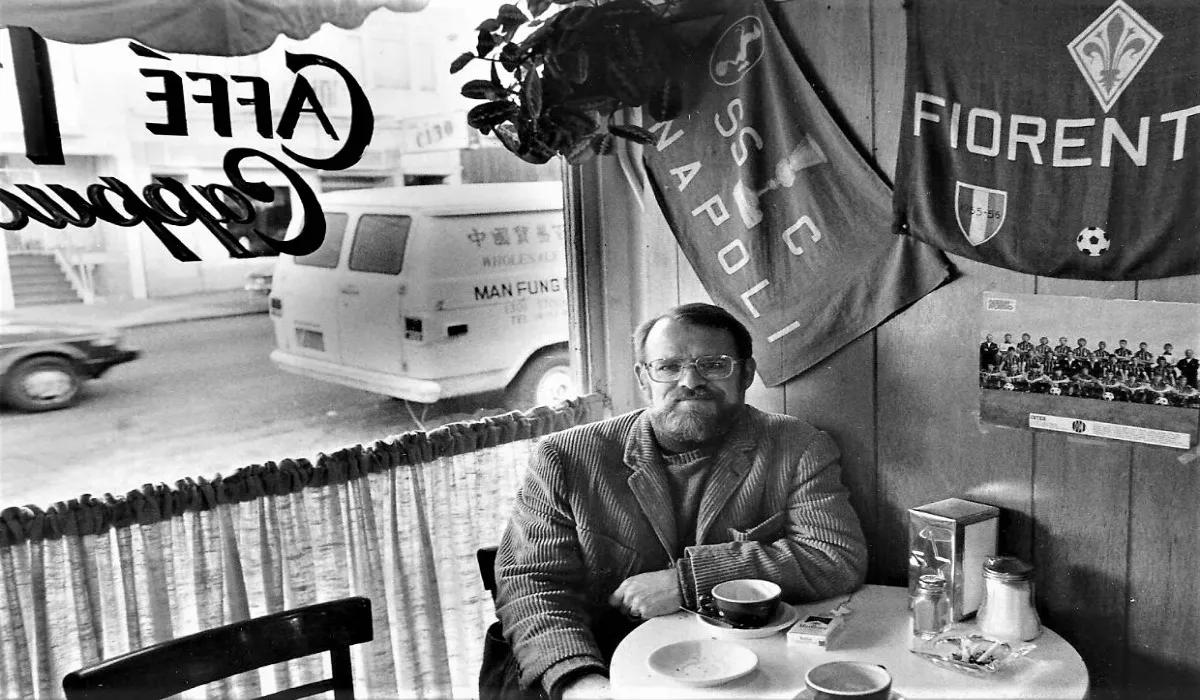
Few American artists sustained a creative life as expansive and quietly complex as Robert McClay. Born on December 15, 1932, in Hollywood, California, he came of age in an environment shaped by cinema, literature, and postwar cultural change. Raised in the San Fernando Valley, McClay discovered early that drawing was more than a pastime. By the age of twelve, he was already working with oil paints, and at fourteen, he began selling his work, an early indication of the discipline and focus that would guide his career for more than sixty years.
Education initially led McClay toward a different path. After graduating from North Hollywood High School in 1950, he entered the University of California, Berkeley, on an academic scholarship to study journalism. His ambition at the time was to work as a foreign correspondent, but the reality of writing quickly revealed itself as a poor fit. Visual thinking came more naturally. He spent increasing amounts of time painting and working with the university theater department, where design and atmosphere mattered as much as words. In 1952, he transferred to San Francisco State College, enrolling in art classes that marked the beginning of formal artistic training.
Restlessness and curiosity soon pulled him beyond the classroom. In 1954, McClay left school and began traveling throughout Europe. Hitchhiking across borders and living in modest accommodations, he absorbed the presence of history firsthand. Museums, architecture, and unfamiliar landscapes reshaped his sense of scale and possibility. The experience was transformative not only creatively but also emotionally. It gave him confidence that a life devoted to art could be built through persistence rather than privilege. Between 1956 and 1960, he returned to Europe several times with his second wife, Lorraine, living and working abroad. The imagery of European cities and imagined historical spaces would remain embedded in his work for decades.
Although already professionally active, McClay eventually returned to San Francisco State College and completed his Bachelor of Fine Arts in 1971. He was the first in his family to earn a college degree, a milestone that carried personal significance. By then, his artistic identity was well defined. Film had become a lifelong influence, shaping his sense of composition and narrative. His visual inspirations ranged from Hieronymus Bosch and Pieter Bruegel the Elder to the Surrealists and the Impressionists, alongside American illustrators such as N. C. Wyeth and Maxfield Parrish.
Creative life in San Francisco during the late nineteen fifties and nineteen sixties further shaped his worldview. McClay was immersed in Beat culture and the Cool Jazz scene, absorbing ideas drawn from Zen philosophy, changing social values, and the expanding boundaries of consciousness. Literature played a central role in his imagination, with writers such as J. R. R. Tolkien, Ray Bradbury, Joseph Campbell, Carlos Castaneda, and Alan Watts informing his symbolic thinking. Jungian psychology became a guiding framework, particularly concepts of archetypes and the collective unconscious. He came to describe his work as montage or fantastic realism, a method that allowed multiple perspectives and symbolic layers to coexist within a single image.
Parallel to his personal painting practice, McClay built a respected career in professional art and design. From 1955 to 1965, he worked as a promotion artist for the San Francisco Chronicle, producing illustrations and commissioned imagery. Later, from 1967 to 1975, he served as art director at KQED Television in San Francisco. His responsibilities included on air graphics, animation, scenic design, and promotional artwork for nationally broadcast PBS programs. This experience sharpened his ability to communicate abstract ideas through clear visual structure.
After leaving KQED, McClay spent nearly forty years working as a freelance artist and graphic designer. His client list included organizations such as AT and T, Levi Strauss, Time Life, Genentech, Safeway Stores, and Lawrence Livermore National Laboratory. Commercial work supported his livelihood, but his personal paintings remained the center of his creative life. During the nineteen seventies and nineteen eighties, he experimented extensively with collage and layered painting techniques, developing a visual language that blended interior psychological states with imagined and real environments.
In later years, McClay divided his time between Daly City, California, and a desert cabin near Twentynine Palms. The Mojave Desert offered isolation, clarity, and a slower rhythm of life. He exhibited his work locally throughout the desert region and along the Northern California coast. Between 2005 and 2010, his paintings were shown regularly in civic and public spaces in Daly City and Pacifica, reflecting a continued engagement with community based exhibition settings during this period.
Across the full span of his career, McClay’s exhibition history also included a range of nationally and internationally recognized venues. These included exhibitions associated with the Palace of the Legion of Honor in San Francisco, the Capitol Arts Program in Washington, D. C., Galleria l Obelisco in Rome, and the Monterey Jazz Festival Art Exhibition, as documented in his professional record.
Around 2009, McClay began experiencing symptoms of Alzheimer’s disease. As visualization and memory gradually declined, painting became increasingly difficult. In 2011, he completed his final artwork, a commissioned portrait, with great effort. He passed away in 2019, and in accordance with his wishes, his remains were donated to the University of California, Irvine Willed Body Program.
Robert McClay’s work continues to reside in private collections, corporate commissions, and regional exhibitions. His paintings remain valued for their layered symbolism, cultural awareness, and deeply personal vision. Across six decades, he built visual worlds that reflected memory, imagination, and the enduring complexity of inner life.